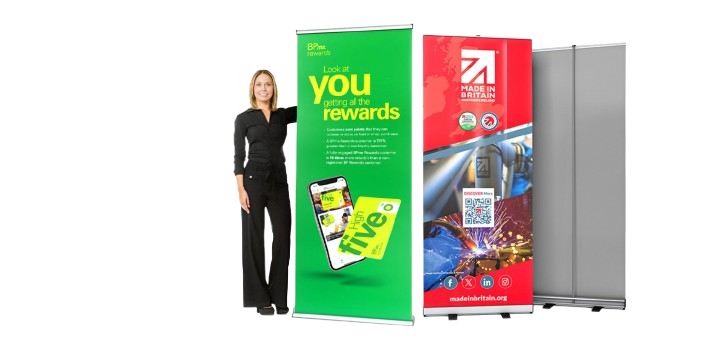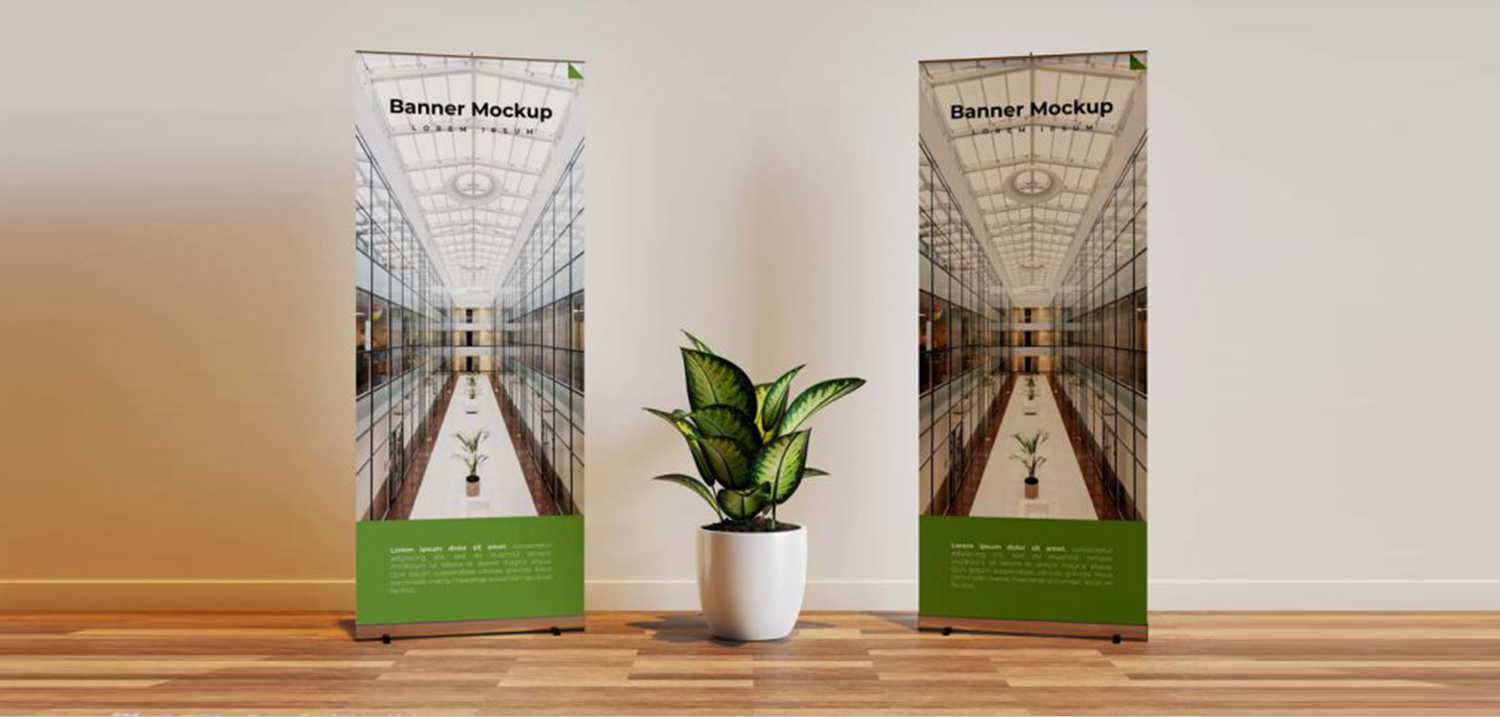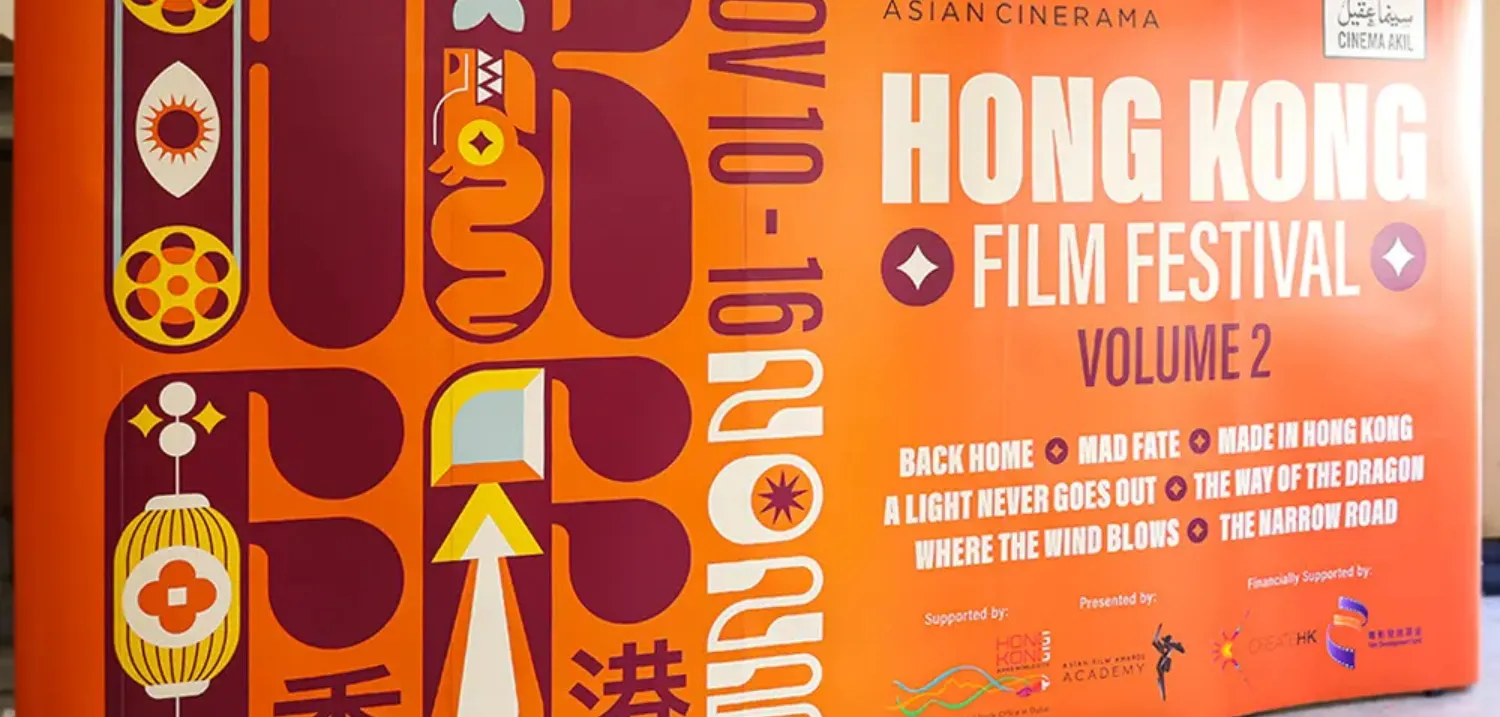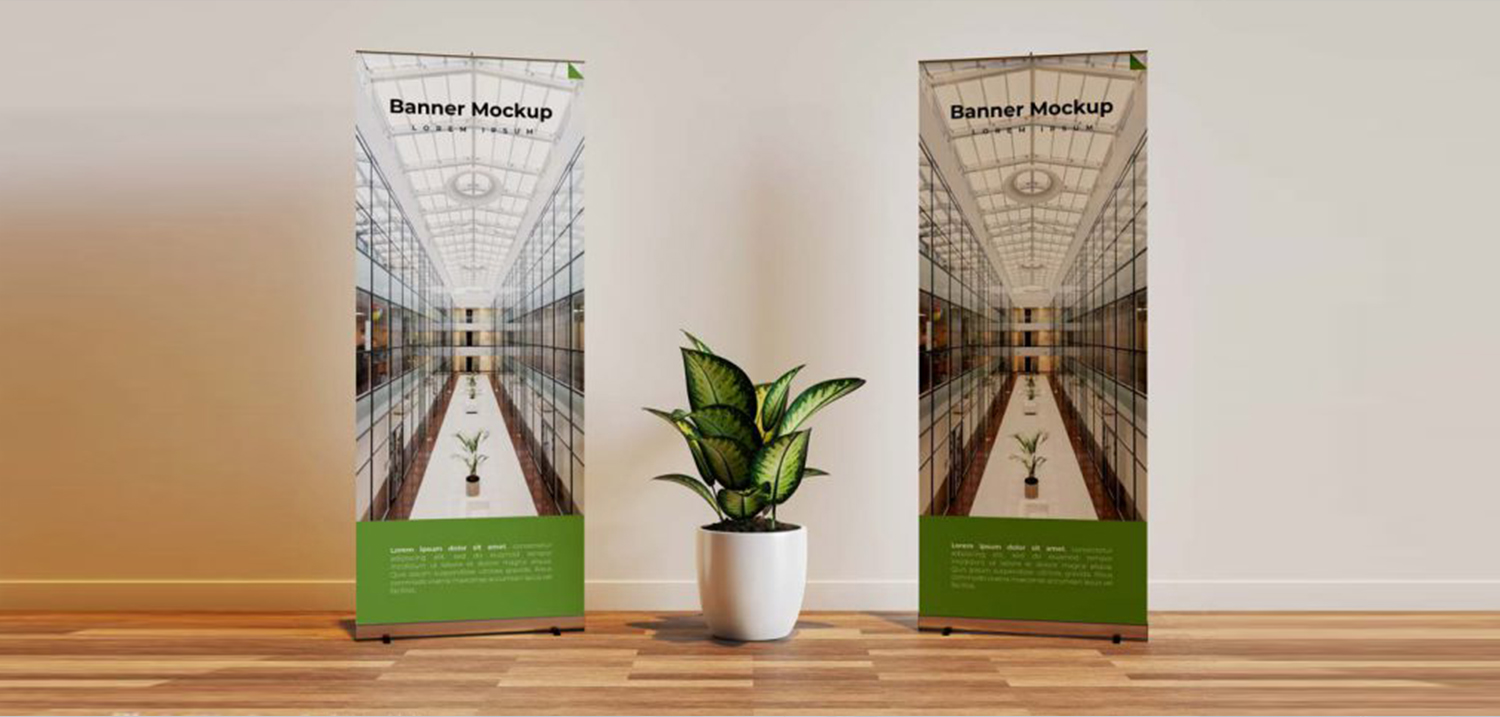
The right roll up banner size depends on your available floor space, viewing distance and message. An 85 × 200 cm banner is a practical starting point for many Dubai exhibitions and business displays, but a narrower or wider format may suit your venue better.
This guide compares rollup banner sizes in Dubai, explains standard, broad-base and premium stands, and shows how to prepare artwork for printing. Before ordering, confirm the visible graphic dimensions and the exact stand template: the advertised display size is not always the complete artwork size.
Rollup banners, also called pull-up or retractable banners, store the printed graphic inside a cassette base. A support pole holds the graphic upright when it is extended.
Many floor-standing models have a visible height of about 200 cm. Widths to consider include 60, 80, 85, 100, 120 and 150 cm, although availability and height vary by model.
Golden Adds currently lists 60 × 160 cm, 85 × 200 cm, 100 × 200 cm, 120 × 200 cm and 150 × 200 cm on its rollup banner printing page. Ask about an 80 cm width or a 60 × 200 cm format before preparing artwork; these are not listed there.
| Width | Height to check | Suitable starting point |
|---|---|---|
| 60 cm | 160 cm listed; 200 cm to confirm | Narrow retail corners and compact displays |
| 80 cm | About 200 cm; availability to confirm | Small event spaces where a narrower format helps |
| 85 cm | 200 cm listed | Exhibition booths and office receptions |
| 100 cm | 200 cm listed | Product promotions and larger entrances |
| 120 cm | 200 cm listed | Open retail areas and wider exhibition stands |
| 150 cm | 200 cm listed | Wide displays with room for a larger visual |
Dimensions are width × height. Check the base footprint separately because the cassette and any support feet occupy additional floor space.
Start with 85 × 200 cm for a compact booth. Consider 100 or 120 cm when visitors approach from farther away, provided the banner does not block your counter, neighbouring displays or visitor access.
A 150 cm banner can give one large image more room, but it is not a substitute for checking your stand layout. For placement and messaging ideas, read our guide to rollup banners for exhibitions and events.
A 60 cm format can suit a narrow promotional corner, while 85 or 100 cm gives a product image more space. Measure the location with doors open and keep the banner clear of customer routes, shelves and emergency exits.
Use 85 cm banners for registration points or directional messages. Wider 120 or 150 cm displays can suit open entrances, but check venue rules and leave room around the base so guests do not trip over it.
An 85 cm banner is a useful starting point for reception branding or service information. Choose a narrower option where seating or doors limit space, and avoid packing the design with small text just because visitors may stand close.
A standard stand usually has a compact cassette, a support pole and, on many models, swivel feet. It can be a sensible choice for occasional indoor promotions where portability matters.
Ask to see the actual model. The word “standard” does not define the same mechanism, weight or build quality across every supplier.
A broad-base stand has a wider supporting base, which can provide more stability than a narrow cassette design. It is worth considering for frequently used retail displays, wider graphics and exhibition settings.
Explore Golden Adds’ broad-base rollup options and confirm the footprint and carrying weight. Extra stability does not make a stand windproof; ordinary indoor rollups should not be treated as outdoor displays.
“Premium” may describe a heavier cassette, improved mechanism, refined finish or easier graphic replacement. It is a product category, not a universal specification, and a broad-base model may also be sold as premium.
If your team travels regularly, ask about the pole, top rail, replacement graphics and bag protection. Choose based on confirmed features rather than the label alone.
Request the template for the exact stand before designing. Three measurements matter: the visible display, the material hidden inside the mechanism, and the bleed outside the trimming line.
The visible area is the part people see. A lower attachment section may retract into the cassette, and the top rail may also cover some material. Keep logos, contact details and other important content away from these concealed sections.
Bleed is extra background beyond the trim edge that helps prevent unwanted white edges after cutting. It is separate from the hidden attachment section and from the safe margin inside the visible design.
Suppose a stand has an 850 × 2000 mm visible area and its template specifies an additional 100 mm hidden lower section. If it also requires 3 mm bleed on every outer edge, the complete artwork would be 856 × 2106 mm.
Those allowances are illustrative, not Golden Adds specifications. Another stand may require different measurements, including a top allowance; never send this example to print without checking the supplied template.
As a starting design margin, keep important content 10–20 mm inside the visible side edges, then follow any larger template requirement. Extend backgrounds into the bleed, but keep text and QR codes clear of trim lines, clamps and hidden material.
A print-ready PDF is a practical delivery format, with fonts embedded or converted to outlines. Ask whether PDF/X-4 is preferred and supply editable artwork separately if design changes are needed.
Keep logos and text as vectors where possible. For photographs, 150–300 pixels per inch at final printed size is a useful planning range; the required resolution depends on image detail and viewing distance. Confirm the production requirement with Golden Adds.
A small website image does not become sharper simply by changing its resolution setting. Use the original photograph, avoid screenshots and tell the printer if your file is designed at a reduced scale.
Confirm the requested colour profile and PDF export settings. Screen colours can differ from print, so flag important brand colours and request a proof where colour matching matters.
Check whether the quotation includes the printed graphic, cassette, pole, top rail and carry bag. Golden Adds’ broad-base page describes a carrying bag, but confirm the package for your chosen model.
Retract the graphic slowly while holding the rail; do not let it snap into the base. Pack the stand dry, protect it from crushing and store it away from excessive heat or moisture.
For reuse, keep the main message relevant beyond one event. Ask whether the mechanism accepts replacement graphics: not every cassette is designed for easy changes, and replacement should be handled by someone familiar with the model.
An 85 × 200 cm banner is a common starting point for exhibitions and offices. Other widths suit different spaces, so confirm the selected model’s visible dimensions before ordering.
No, height varies by stand and format. Golden Adds currently lists its 60 cm-wide banner at 160 cm high, while several wider options are listed at 200 cm.
Not necessarily, because the print file may need bleed and material hidden inside the base or top rail. Use the exact stand template rather than the visible size alone.
A broad-base design can provide additional stability, which is useful for wider or frequently used indoor displays. The better choice depends on the actual model, floor space and transport needs.
Some mechanisms allow replacement graphics, but others are less suitable for repeated changes. Ask Golden Adds to check your stand before ordering a replacement print.
Send your preferred size, quantity, venue, deadline and artwork status through our rollup banner printing service. Ask us to confirm the stand, artwork template and carry bag before you approve production.
Golden Adds is the brand of Golden Point Advertising LLC, established in 2002 and based at Warehouse No 8, Al Qusais Industrial Area 5, Dubai. Request a quote on WhatsApp, call +971 4 370 5277, or email [email protected].
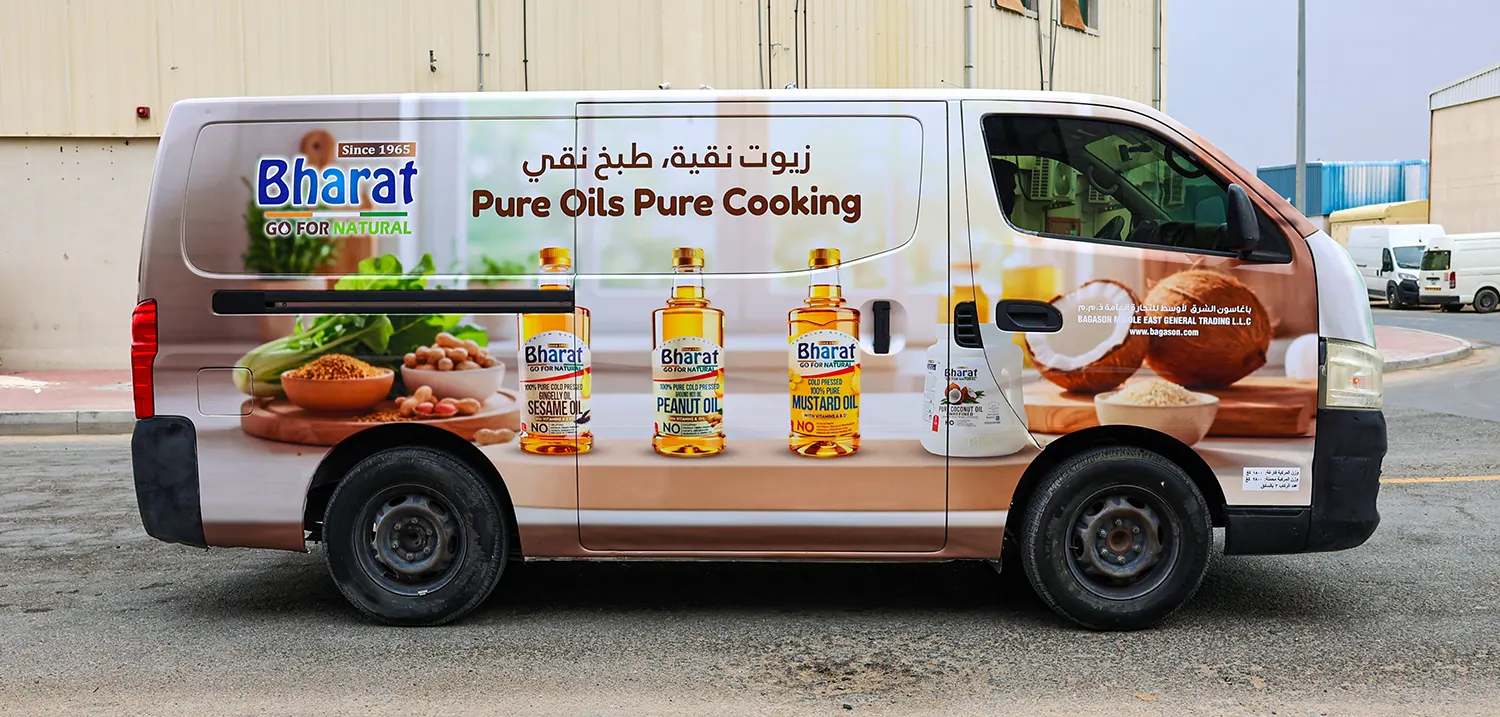
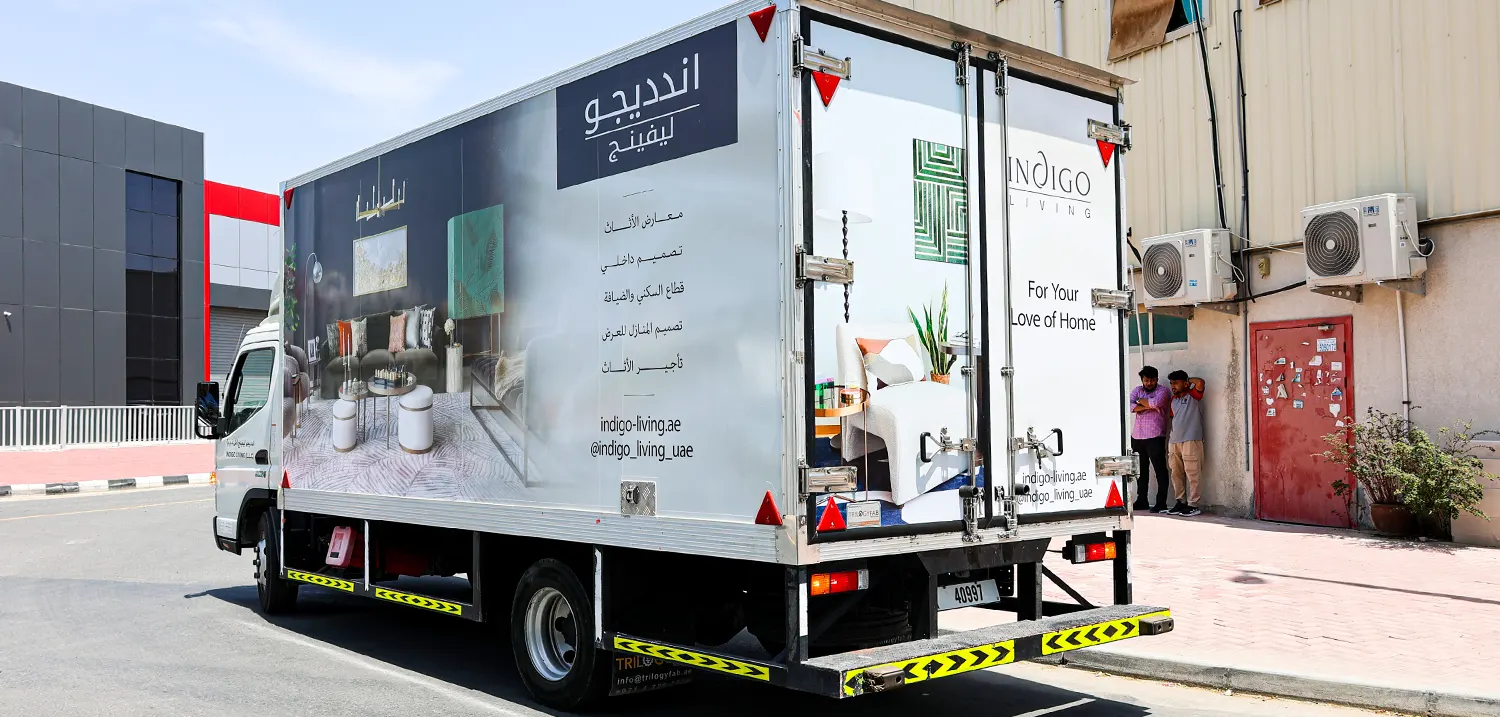


Golden Point Advertising LLC, founded in 2002, is a top branding company in Dubai specializing in digital printing, signage, and vehicle branding solutions, delivering premium, customized services to maximize brand visibility and business impact.